
Why Smart Businesses Are Turning to Solar
There is a particular kind of anxiety that sets in when you watch the fuel gauge on a generator edge toward empty and there’s no certainty about what you’ll pay to fill it again. For the managers of commercial farms, game lodges, remote warehouses, and distributed businesses across South Africa, that anxiety has become a near-constant companion in 2026.

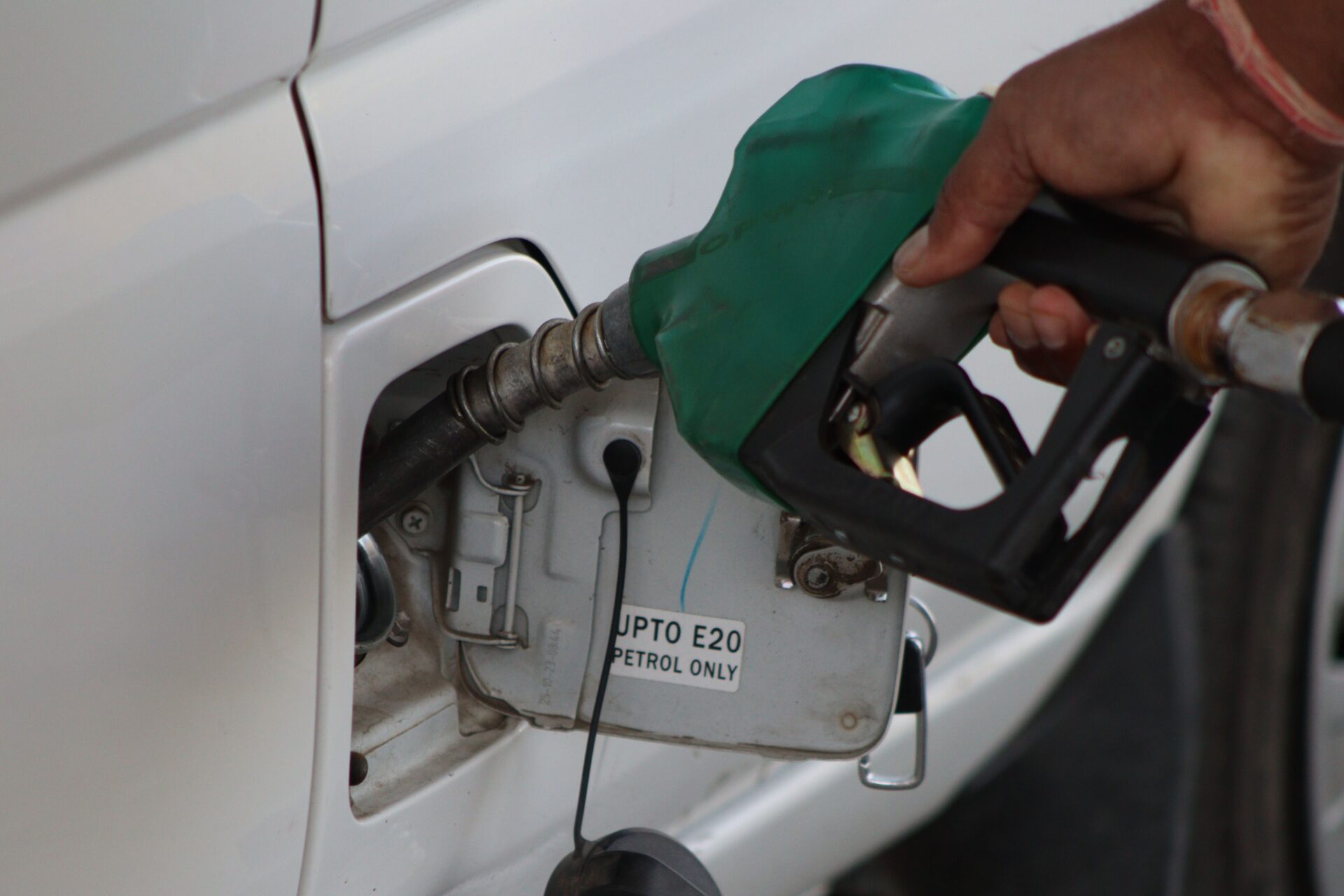
Diesel, the lifeblood of off-grid and semi-grid operations, has become a moving target. Following the outbreak of conflict between the United States, Israel and Iran in late February 2026, international oil markets were thrown into sustained disarray. Brent crude climbed from below $94 a barrel to over $101, and South African consumers felt the full force of it. In April and May alone, the price of diesel surged by more than R7 per litre, with private buyers in some regions facing increases of close to R10 per litre. At the time of writing, diesel is trading at over R31 per litre in parts of inland South Africa. For businesses running generators as either a primary or backup power source, this is not an inconvenience. It is an existential cost challenge.
But this moment is about more than a price spike. What South Africa’s diesel-dependent businesses are confronting is the slow collapse of diesel as a viable long-term energy strategy. The compounding pressures, geopolitical shocks, a weakening rand, a fragile grid, and a government rebate regime being wound back, are not episodic. They are structural. And for businesses that have built their operating models around diesel, the question is no longer whether to adapt. It is how quickly.
The government extended its temporary fuel levy reduction, a welcome R3.93 per litre reprieve on diesel but has been explicit that it is a short-term measure. From June 2026, that relief will be halved. From July, it disappears entirely. For agricultural and other diesel-dependent industries quietly managing exposure through the SARS Diesel Refund System, the runway is shortening fast. Businesses that have structured their operating costs around that rebate are now being forced to reckon with what comes next.
Compounding matters is a structural reality South Africans know intimately: the electricity grid is not reliable. While loadshedding has eased from the peak pressures of 2023, the grid remains fragile, particularly in farming districts and industrial corridors far from urban centres. Ageing transmission infrastructure, even in coal-heavy provinces like Mpumalanga, means chronic supply uncertainty regardless of the national picture.
For farms, game lodges, agri-processing plants, and other distributed operations, the generator was never really a choice. It was a necessity imposed by geography and infrastructure. But what started as a sensible contingency has quietly become one of their largest fixed operating costs, one that a fuel price environment they cannot plan around has now brutally exposed. When diesel jumps by R10 a litre within weeks, the ripple effects move fast through production costs, margins, and ultimately consumer prices.
What separates this fuel price cycle from previous ones is not just the severity of the increase, it is that the economics of the alternative have matured in parallel. Commercial solar technology has advanced substantially. Battery Energy Storage Systems have come down meaningfully in cost and improved in capability. Together, they now offer something that wasn’t credibly on the table five years ago: a serious, engineered substitute for diesel dependency, sized and configured to match the specific demands of almost any commercial operation.
This is the conversation Inyosi has been having with clients, not as a theoretical future state, but as a present-day problem with a present-day solution. The approach starts with a simple but rigorous question: what would it actually take to eliminate, or drastically reduce, generator runtime for this specific operation? Not as an aspiration, but as a design objective. A detailed assessment of energy needs and load requirements, followed by a solution integrating solar generation, battery storage, and where genuinely necessary, a right-sized generator held in reserve as a last line of redundancy rather than a first line of defence.
Inyosi is not alone in making this case, the broader shift toward commercial solar is already underway, accelerated by exactly the kind of price and policy environment South Africa is navigating right now. What Inyosi brings is the ability to translate that shift into a specifically engineered outcome for each operation, backed by a partnership with Specialised Solar Systems: over 14,000 completed installations and more than a decade of commercial experience across South Africa and Namibia. At the scale and complexity that commercial operations demand, that depth of experience is the difference between a system that performs and one that merely exists.

For corporate investors, treasury teams, and ESD decision-makers assessing businesses in their portfolios or supply chains, the energy question has quietly shifted category. It is no longer a sustainability consideration. It is an operational risk one. A business heavily exposed to diesel, without a credible plan to reduce that exposure, carries a risk profile that deserves direct attention.
The most consistent reason SME businesses give for not acting sooner on solar is straightforward: they don’t have the upfront capital. Inyosi has addressed this directly. Solar funding through Inyosi means businesses do not need to find the capital themselves, fully funded, structured around the cash flow realities of established SMEs, with competitive rates, no hidden fees, and no early repayment penalties. The monthly energy saving typically offsets the financing cost, meaning the transition to solar is not a capital event to be budgeted for. It is a cost restructure that begins working from day one. Qualifying criteria: turnover exceeding R1 million and at least three years of operational history.
The fuel price environment of 2026 is not an anomaly to be waited out. The structural pressures driving it are not resolving. They are deepening.
The technology works. The financing exists. The payback period, in an environment of R31-per-litre diesel and rising tariffs, has compressed to the point where inaction is the more expensive choice.
South Africa’s diesel-dependent businesses are not facing a fuel problem. They are facing a strategy problem. And the ones who treat it like one, right now, will be the ones still standing when the next shock hits.