
A proudly South African story of perseverance, community, and a business built to last.
Some companies are defined by a single moment of brilliance. Basani Marine is defined by something far less common: decades of quiet determination, a refusal to quit when the odds were against them, and a commitment to the communities they call home. Their decision to go solar is simply the latest chapter in a story that began over two decades ago with one man, one broken ship, and an unshakeable belief that it could be done.
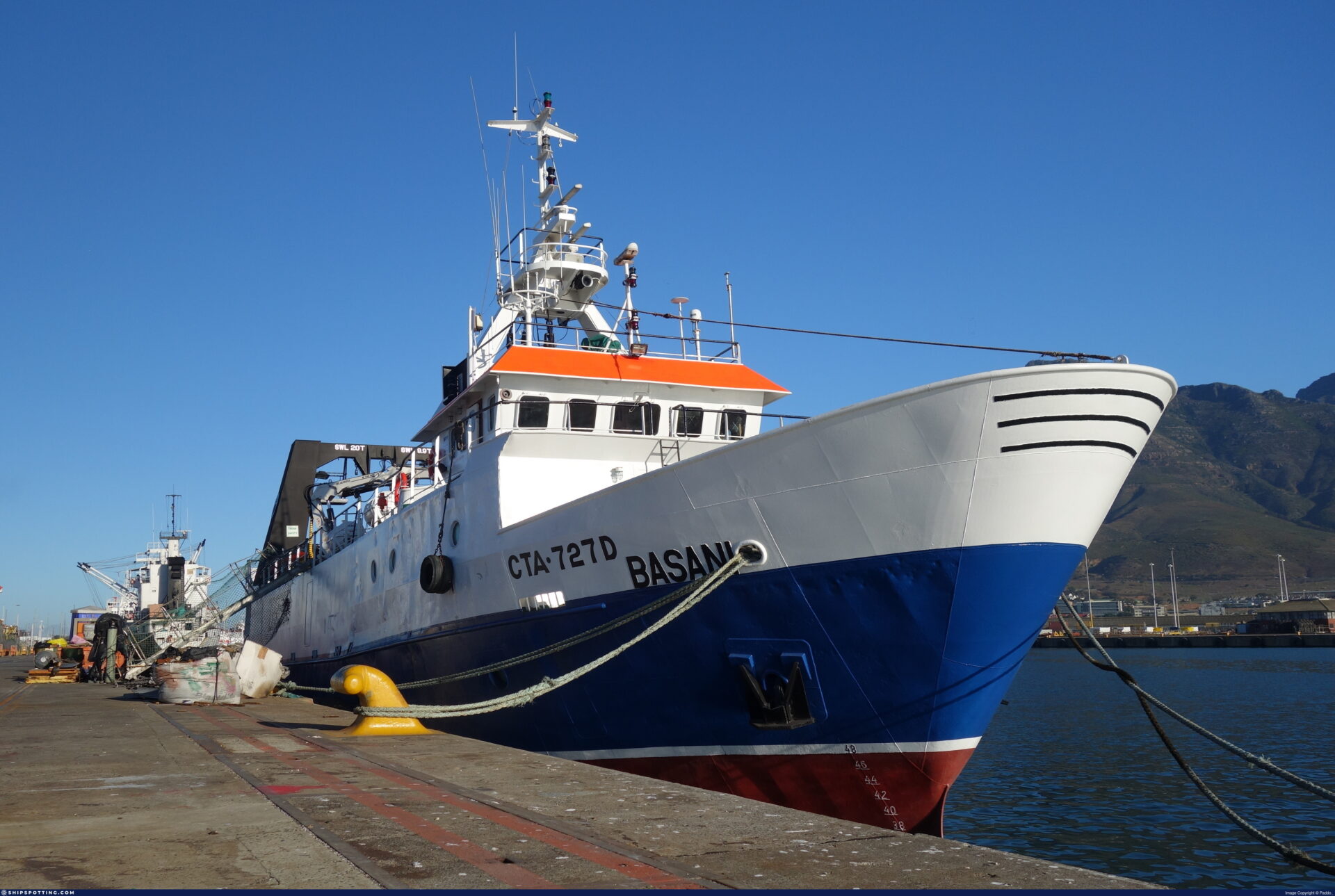
Basani Marine (Pty) Ltd was founded in 1998 by Arthur Shipalana, a South African entrepreneur with a vision to establish a meaningful presence in our country’s fishing industry. Arthur did not build this vision alone. Alongside him from the very beginning were his co-founders, Willem Walters and Lulamile Xate, whose partnership and shared determination were instrumental in turning that early vision into a living, breathing enterprise. His first move was bold: acquire a vessel from Spain and bring it home to begin deep-sea hake trawling operations off South Africa’s West Coast.
It nearly didn’t happen! When repairing the ship and making it seaworthy for the voyage from Spain to South Africa proved far harder than anticipated, Arthur feared the dream might end before it had properly begun.

He didn’t walk away. Through perseverance, and a partnership with a family-run business in Spain, Arthur got the vessel home and laid the foundation for what would become one of the most respected black-owned fishing operations in the country. Today, Basani is a 75% majority black-owned entity, a fact that carries real weight in an industry where transformation has often moved slowly.
That original Spanish partnership was not a short-term steppingstone and has deepened into a relationship that now defines Basani’s commercial profile. Majority of their catch is exported to the EU market through dedicated partners and supply chains in Spain; making the Basani brand a highly sought-after name in the Spanish seafood market. A remarkable achievement for a company with such humble beginnings.


The business Arthur built is no longer considered small. Basani’s fleet now includes 2 trawling vessels, 3 pelagic vessels, and 3 squid vessels, with approximately 150 people working at sea across the eight vessels. While on land, their HACCP-Certified hake factory in St Helena Bay further employs a significant number of the local community.
HACCP, (Hazard Analysis and Critical Control Points) is an internationally recognised, independent food safety management standard. For Basani, that certification is not incidental; it is a prerequisite for supplying the EU’s demanding seafood markets and a clear signal of the rigour the company applies to everything it does.
Construction is currently underway on an additional bait production facility directly across the road from the St Helena Bay hake factory. When complete, it is expected to create approximately 60 new jobs, the majority going to women from Laingville and the surrounding area. In a small coastal town where, formal employment can be scarce, that is not a footnote, it is a transformation.
South Africa’s energy environment has placed real pressure on businesses across every sector, and few feel it more acutely than those with international obligations to meet. For a company like Basani, where export compliance, product quality, and cold-chain integrity are non-negotiable, rising electricity costs and grid instability are not abstract concerns. They are operational risks with real commercial consequences.
The decision to invest in solar at Basani’s Cape Town head office in Paarden Eiland was driven by a straightforward calculation: take control of a cost that has increased year on year whilst being difficult to manage. Reducing their exposure to the grid that has proven unreliable and expensive, shielding them against volatile price increases and propelling the business into a new phase.
What emerged from that calculation goes beyond a good business decision, it is a trifecta of success:
First, immediate cost savings that begin from day one and grow considerably over the years ahead, with the cumulative benefit expected to run into the millions over a twenty-year period,
Second, meaningful energy independence, with the system designed to cover Basani’s full daytime load and take the entire building as close to off-grid as possible during daylight hours throughout the year, and
Third, any surplus energy generated is sold back to the City of Cape Town grid, turning a former cost centre into a modest but real revenue stream.
Three wins. One roof. One solar system. Real long-term benefit. A purpose-built system, set to deliver.
The Role of Inyosi Solar

An important part of solar installation that often gets overlooked is the funding required to being able to take that first step towards sustainable operations. The need is there, but the process feels overwhelming.
In Basani Marine’s case, the installation was funded by Inyosi Solar and structured as a financial lease-to-own. This model is specifically designed to make high-quality solar solutions accessible to black-owned SMEs without requiring large upfront capital outlay, whilst ensuring that ownership is transferred to the SME after 7 years. For Basani, this meant no disruption to cash flow; and savings from the very first month.
Inyosi Solar focuses specifically on SME’s active in many sectors, doing meaningful work and building something sustainable. For these SME’s the path to energy independence has not always been straightforward. The financial lease model ensures that the transition is both commercially sensible and immediately rewarding.
“We are very proud to partner with Basani Marine,” said Evan Jones, CEO of Inyosi Empowerment. “They represent everything we believe in; a resilient, community-minded business that has overcome real adversity, grown responsibly, and is now thinking seriously about the long term.”
A Wider Shift – and Why It Matters
Basani’s move is not happening in isolation. Across South Africa, businesses with export obligations and international quality standards are increasingly treating energy resilience as a strategic priority rather than an environmental obligation. Persistent tariff increases and an unreliable grid have changed the equation for many operators, and for majority black-owned businesses, who have historically faced greater difficulty accessing capital for infrastructure investment, the barrier has been even higher.
This is precisely the gap Inyosi’s model is designed to close, channelling Enterprise and Supplier Development funding into practical solutions that deliver measurable and immediate returns for the businesses that need them most.
From a broken ship in a Spanish port nearly thirty years ago, to eight working vessels, a certified processing factory, an expanding bait facility, and now a solar-powered head office; Basani Marine’s journey is one of sustained ambition, hard-won resilience, and an enduring commitment to the people who depend on them.
Arthur Shipalana, Willem Walters, and Lulamile Xate started with a vision and the willingness to endure. Over two decades later, their company provides livelihoods for hundreds of South Africans, supplies premium seafood to one of the world’s most demanding markets, and is making deliberate choices about the kind of business it wants to be going forward.
They began with one ship and a dream that nearly didn’t make it across the ocean. What they built instead is a company that keeps finding new ways to go further, and by installing solar, has enhanced its sustainable legacy.
Images from the Solar Installation at the Basani Marine Cape Town Head Office


