

What It Is, Why Lenders Ask For It, and What It Means for You
Picture this: you’ve found a real opportunity to expand your business. You apply, and the response comes back:
“We love the business model, but we can’t move forward due to a lack of unencumbered security.”
It’s one of the most common reasons promising applications stall. Once you strip away the jargon, the concept is simple and knowing how it works changes how you approach funding.
What Does “Unencumbered” Actually Mean?
- Security (or collateral): the asset you offer to guarantee a loan – property, equipment, cash, and so on.
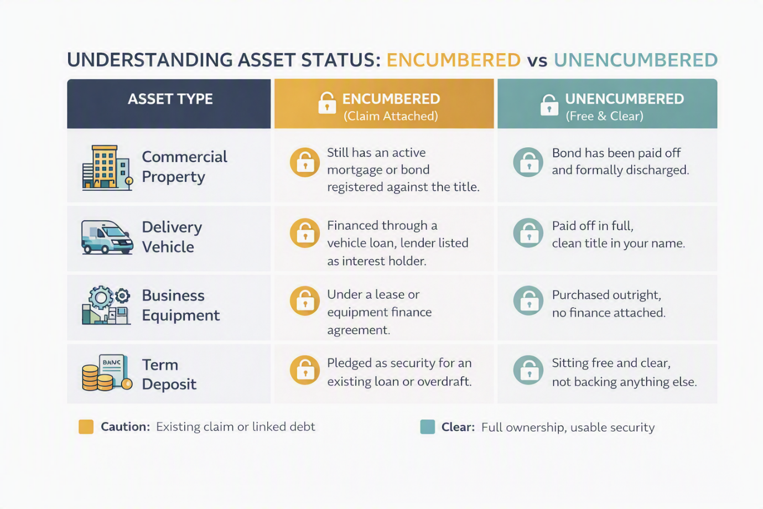
- Unencumbered: free of any registered claim against it – no outstanding mortgage, bond, , or legal charge.
In other words, you own it outright and nobody else has a registered claim on it. A financed delivery van is encumbered until the loan is paid off and the lender’s claim is released, then it’s unencumbered. What matters isn’t whether you owe money anywhere; it’s whether anyone has a registered claim against that specific asset.
Where Security Fits in the Process
Unencumbered security isn’t one of Inyosi’s three published qualifying criteria (51% black-ownership, over R1 million in turnover, and a track record of more than 3 years) and deliberately so, since we don’t want it discouraging people before they’ve even applied. But it sits at the very next stage and carries just as much weight: a business can meet all three criteria and still not move forward without security to put against the loan. The criteria get you to the table; unencumbered security is what lets the deal close.
A Quick Reality Check
Here’s how the distinction plays out with common business assets:
Why Lenders Need Clean Security
First in line. If a business defaults, the lender recovers funds from the pledged asset. Whoever’s claim was registered first gets paid first – a second lender can sometimes fund behind that, usually at a higher rate. This is “first-ranking” vs “second-ranking” security.
Speed and simplicity. A clean title means no competing claims and no negotiation between institutions, so processing stays fast.
Proof of financial momentum. Assets owned outright show real equity, not a judgement on carrying debt, just something firm to lend against.
Movable vs Immovable Security
Immovable is land and anything permanently attached to it, secured by a mortgage bond registered at the Deeds Office (four to eight weeks, plus attorney costs).
Movable is everything else, vehicles, machinery, stock, debtors, cash, secured by a notarial bond, pledge, or cession, which is quicker and cheaper but depreciates and can move, which is why we ask for trackers, insurance cessions, and asset verification.
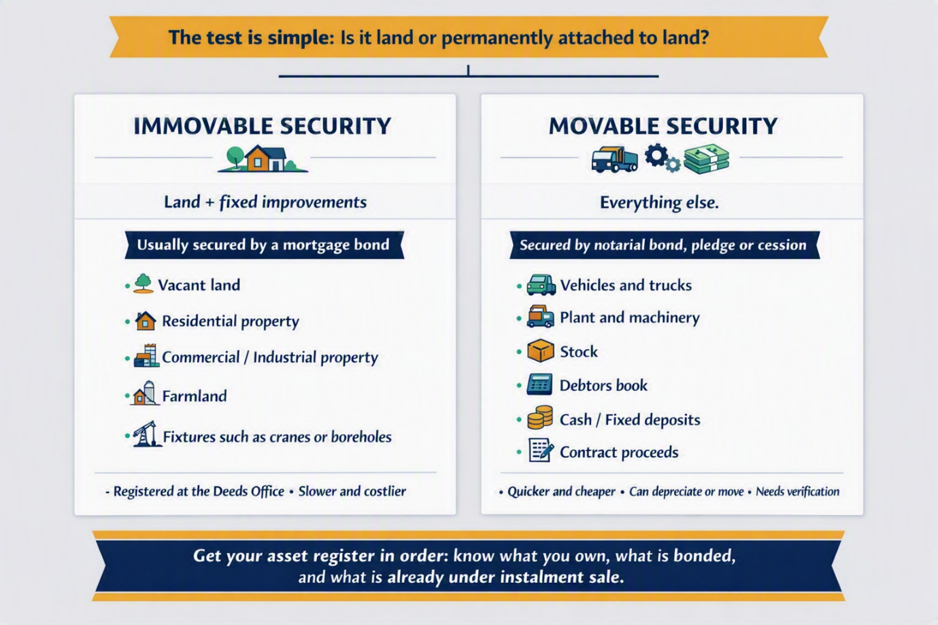
Most deals use both. Being asked for security isn’t mistrust, it’s what lets a funder say yes at a sensible interest rate.
One thing to do now: get your asset register in order, know what you own and what’s already bonded. It shortens the process considerably.
What You’re Actually Agreeing To
Pledging an asset means giving the lender a legal claim over it for the life of the loan. If you default, that asset is what the lender can pursue to recover their money. Understanding what you’re pledging, and what happens if repayments go sideways, matters just as much as understanding the term itself.
A Few Related Terms Worth Knowing
Lien: a legal right another party holds over your asset until a debt is settled.
First-ranking vs. second-ranking security: who gets paid first if the asset has to be sold to cover the debt.
Cross-collateralisation: when one asset secures more than one loan or facility – worth watching, since it can tie up an asset you thought was free.
How to Get Funding-Ready Before You Apply
- Do a quick asset audit. Identify which assets are genuinely debt-free.
- Gather proof early. Title deeds, paid-in-full receipts, or settlement letters.
- Ask about usable equity. If a property’s value significantly exceeds the remaining debt, some lenders will work with that difference.
- Starting from scratch? Talk to us early – we can map a path, whether that’s building equity faster, letting a deposit mature, or using a guarantor’s asset in the meantime.
The Bottom Line
Hearing that you need “unencumbered security” isn’t a dead end – it’s a structural check, and now you know exactly what it’s checking for and how you can get there.