
Give Credit where Credit is Due! – Funding the Un-Fundable.
A shared vision to empower marginalised women entrepreneurs in South Africa lies at the heart of the long-standing and impactful relationship between Inyosi and the Small Enterprise Foundation (SEF). Since 2009, Inyosi has been a pivotal funding partner to SEF, enabling the growth of micro-enterprises and forging a tangible path out of poverty for thousands.
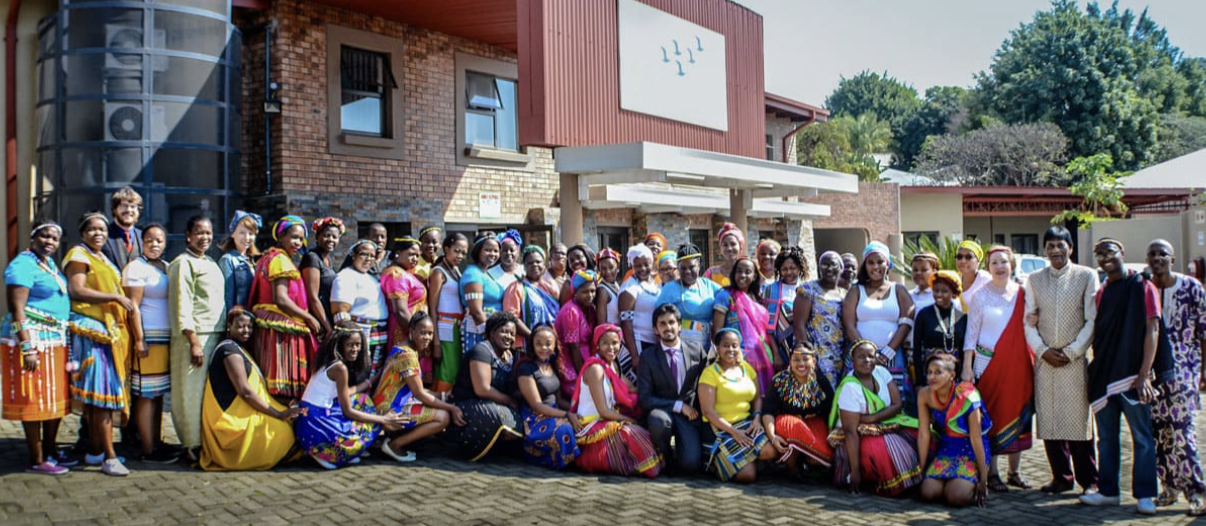
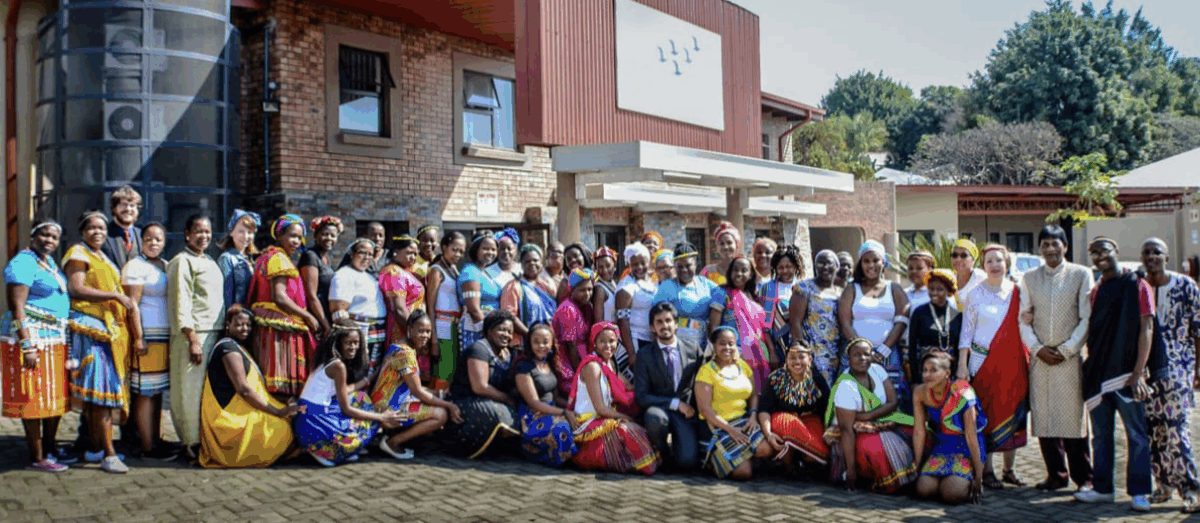 SEF Head Office Team – Tzaneen
Founded in 1992 by John De Wit and the late Matome Malatji, the Small Enterprise Foundation began with a powerful vision in Limpopo province. Today, its reach has expanded dramatically, serving over 175,911 clients, 99% of whom are black women
micro enterprises, across seven of South Africa’s nine provinces.
The core challenge for these aspiring micro-entrepreneurs is not a lack of motivation or skill, but access to capital. This is where the synergy between Inyosi and SEF creates a powerful solution. Inyosi provides crucial loan funding to SEF, which in turn
strengthens and expands its micro-enterprise financing programme, directly connecting women to the resources they need to build sustainable micro enterprises. Charl van Vuuren, CFO of SEF, highlights the value of this collaboration, describing Inyosi as “a team of competent innovators who are dedicated and committed to seeing their borrowers succeed and implement their Black Economic Empowerment programmes.”
The recent economic turmoil and the effects of the COVID-19 pandemic presented significant challenges, causing a temporary but significant dip in SEF’s micro enterprise financing. However, with the resilience of its clients and the steadfast support of partners like Inyosi, SEF’s operations are once again on an upward trajectory.
The businesses funded are the heartbeat of local economies. They include everything from fruit and vegetable hawkers and clothing resellers to small convenience shops and dressmakers. On average, each micro-enterprise creates employment for 1.4 individuals, making a significant grassroots impact.
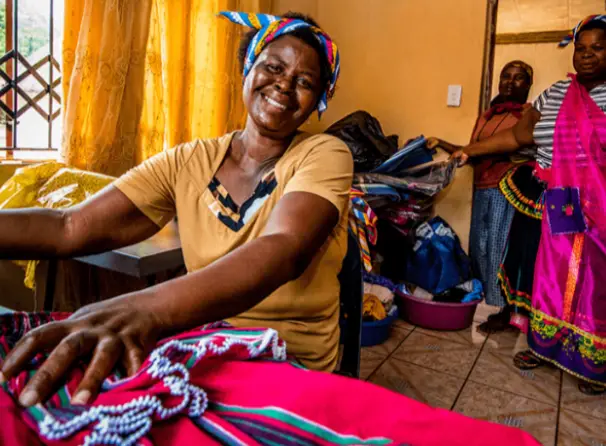
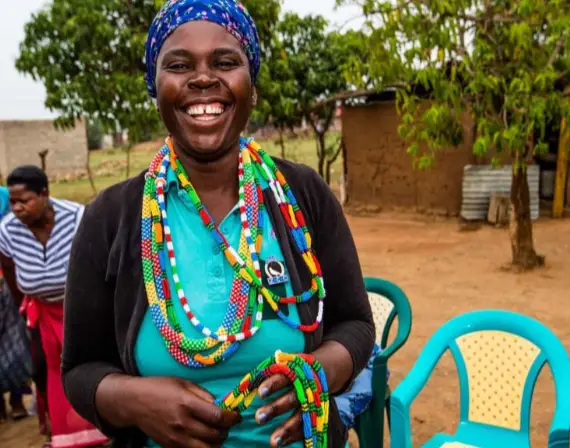
Dress maker Bead maker
Priority for SEF is ensuring its micro-enterprise finance programme reaches those who will benefit most. To achieve this, it employs rigorous, industry-standard tools to measure its poverty outreach vision and obtain tangible improvements in clients’
lives:
- The Poverty Probability Index (PPI): This statistically robust tool assesses the likelihood that a household is living below the poverty line, allowing SEF to track the economic progress of its clients over time.
- Participatory Wealth Ranking (PWR): This community-based approach draws on local knowledge to understand the relative wealth of households, providing a nuanced, qualitative perspective on well-being.
By consistently collecting and analysing this data, alongside client satisfaction surveys and other research, SEF ensures that its micro-enterprise finance programmes, powered by Inyosi’s funding, are genuinely effective.
SEF utilises a group-based lending methodology inspired by the Grameen Bank. By way of background, Dr Muhammad Yunus founded the Grameen Bank in Bangladesh after being inspired to provide small, collateral-free loans to the poor during the 1974 famine.
Potential members form groups of five and collectively guarantee each other’s loans. This fosters a strong sense of community and mutual accountability. By April 2025, Grameen Bank had disbursed over US$40 billion in loans and expanded its services to include educational loans, support for new entrepreneurs, and even interest-free loans to help beggars achieve self-sufficiency. Its impactful model for social and economic development from the grassroots level earned the bank the Nobel Peace Prize in 2006 and has been replicated worldwide.
While SEF does not act as a savings institution, it mandates that beneficiaries build their own savings, creating a crucial financial buffer that supports financial independence. This buffer saved many of these micro-enterprises from ruin during Covid.
The enduring partnership between Inyosi and the Small Enterprise Foundation is a testament to the power of collaborative and responsible investment. It is a relationship that not only fuels small businesses but also empowers communities, one woman and one enterprise at a time.